

P.U.L.S.E.
Practical Understanding of Lifesaving Skills and Experience
To inquire about public or set up a group training, please send an email through the link.
Upcoming Courses


Emergencies Don’t Wait for the Perfect Moment
Emergencies don’t schedule themselves — and in Nova Scotia, help can take longer than most people expect.
Many of us assume that if something goes wrong, an ambulance will be there in minutes. The reality is more complicated.
Across Canada, urban ambulance response targets are often 8–10 minutes, with longer standards for rural areas. In Nova Scotia, where Emergency Health Services covers the entire province, actual response times have averaged closer to 18 minutes in recent years — and in the past have often been 20–25 minutes or more. In rural or hard-to-reach communities, response times can be even longer.
Those minutes matter.
Because in a medical emergency — cardiac arrest, severe bleeding, choking, overdose, or loss of consciousness — what happens before paramedics arrive can mean the difference between recovery and tragedy.


Most Emergencies Happen at Home — With People You Love
Here’s the part most people don’t realize:
Most emergencies don’t happen in public places. They happen at home.
-
About 73% of out-of-hospital cardiac arrests occur in private residences
-
Immediate CPR can double or even triple survival chances
-
Nearly one-third of injury deaths happen in the home
That means if you ever need First Aid or CPR, it will most likely be for someone you love — a partner, child, parent, friend, or neighbour.
When something goes wrong, you are already there.
Nova Scotia Needs More People Ready to Act
Nova Scotia’s geography, weather, and response times make bystander action especially important.
Cardiac arrest, severe bleeding, opioid poisoning, choking, allergic reactions, and environmental emergencies don’t wait for sirens. They need action now — often from the people closest to the person in distress.
Your phone can’t perform CPR.
A video won’t stop severe bleeding.
But you can — with training.


Naloxone & Opioid Poisoning Awareness: A Critical Skill Today
The unregulated drug supply has changed. Many substances now contain unpredictable and dangerous additives, increasing the risk of overdose — especially among youth and young adults.
That’s why our training includes opioid poisoning awareness and naloxone education.
Participants learn:
-
How to recognize signs of opioid poisoning
-
How and when to administer naloxone
-
What to do while waiting for emergency responders
-
How to keep themselves safe while helping others
We hope no one ever needs to use these skills — but being ready can save a life.
One of the Highest-Value Investments You Can Make
We know times are tough. Everything feels more expensive.
That’s exactly why First Aid + CPR is one of the highest-value investments you can make.
For roughly $120–$170, you’re not just paying for a certificate:
-
You’re gaining the confidence to act instead of panic
-
You’re learning how to help while an ambulance is on the way
-
You’re building skills that last for years
-
You may only need them once — but they matter forever

Types of Courses
Beginner (Emergency) First Aid and CPR (1Day in Person)
Emergency First Aid and CPR training is an indispensable one-day course that equips you with the essential skills to save lives in an emergency, whether at home or work.
This course is a must-have, as it meets the requirements for the Federal or Provincial Authority Having Jurisdiction over first aid training for the workplace. Additionally, the course content meets the Canadian Standards Association (CSA) standard Z1210 for Basic first aid training. Includes the latest first aid and CPR guidelines. Enroll today to gain the knowledge and confidence to handle any emergency situation efficiently.
Course Content
-
The Red Cross
-
Preparing to respond
-
The EMS system
-
Check, Call, Care
-
Airway emergencies
-
Breathing and Circulation emergencies
-
First aid for respiratory and cardiac arrest
-
Wound care
-
Opioid poisoning awareness information


Intermediate (Standard) First Aid and CPR (2 Day in Person)
Learn how to save lives by enrolling in our comprehensive two-day course focused on first aid, cardiopulmonary resuscitation (CPR) and automated external defibrillators (AED) for adults, children, and infants. This course is perfect for professionals or anyone who wants to improve their knowledge for personal reasons.
This course is a must-have, as it meets the requirements for the Federal or Provincial Authority Having Jurisdiction over first aid training for the workplace. Additionally, the course content meets the Canadian Standards Association (CSA) standard Z1210 for Basic first aid training. Includes the latest first aid and CPR guidelines. Enroll today to gain the knowledge and confidence to handle any emergency situation efficiently.
Course Content
-
The Red Cross
-
Preparing to respond
-
The EMS system
-
Check, Call, Care
-
Airway emergencies
-
Breathing and Circulation emergencies
-
First aid for respiratory and cardiac arrest
-
Wound care
-
Head and spine injuries
-
Bone, muscle and joint injuries
-
Sudden Medical Emergencies
-
Environmental Emergencies
-
Opioid poisoning awareness information
Biker Down First Aid and CPR
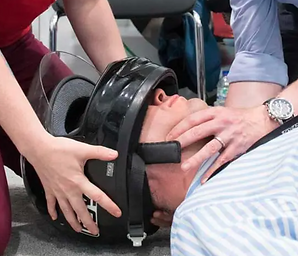
Why it matters: On the road, seconds count. Biker Down teaches riders how to assess crash scenes, protect a victim, stop bleeding, manage shock, and provide life‑saving CPR until EMS arrives — practical skills that can save a friend, partner, or stranger.
Who should take it:
-
Motorcyclists, e‑bike and scooter riders
-
Riding partners, group leaders and instructors
-
Anyone who spends time on two wheels or supports riders at events
What you’ll learn:
-
Safe scene and casualty assessment after a crash
-
Immediate bleeding control and wound management
-
Spine and limb injury precautions and safe rider handling
-
CPR & AED use for cardiac emergencies
-
Practical, scenario-based drills you can apply on the road

Flexible Training Options That Fit Your Life or Business
We make training accessible and straightforward:
✅ On-Site Group Training
We come to your workplace and schedule training to minimize downtime and disruption.
✅ Public Courses
Prefer a public session? I offer regular Emergency and Standard First Aid + CPR courses. Both options provide certified training that meets Nova Scotia workplace requirements.