

F.L.O.W
Functional Lifestyle for Overall Wellness
Community Votes "BEST" RMT in Halifax 2 Years in a Row
TO BOOK AN APPOINTMENT FOLLOW THE LINK
Clinical Massage Therapy
Clinical massage therapy is a targeted, assessment-driven form of massage focused on treating pain, injury, and movement problems. Therapists use specific techniques (deep tissue, myofascial release, trigger point work, joint mobilization) chosen after an evaluation to address the root causes of symptoms and restore function.
Who it’s for
-
People with acute or chronic musculoskeletal pain (back, neck, shoulders).
-
Those recovering from strains, overuse injuries, or surgery (as advised by a clinician).
-
People with restricted joint mobility, postural issues, or recurring tension.
-
Anyone wanting hands-on therapy as part of a rehab or pain-management plan.
What to expect
-
Assessment: A brief history and movement/posture checks to identify problem areas.
-
Treatment: Focused hands-on work to release tight tissues, reduce trigger points, and improve joint motion; sessions are goal-directed.
-
Sensations: You may feel pressure, deep release, or mild soreness afterward; many experience reduced pain and improved movement.
-
Aftercare: Home exercises, stretches, posture advice, and activity modifications are commonly prescribed to maintain gains.
Benefits
-
Reduces pain and muscle tension.
-
Improves range of motion and functional movement.
-
Speeds recovery and supports rehabilitation when combined with exercises and medical care.
-
Helps identify and address underlying contributors (posture, gait, muscle imbalances).


Sports Massage
Sports massage is a hands-on therapy focused on muscles and movement to help athletes and active people perform, recover, and avoid injury. It uses techniques like deep tissue work, stretching, and targeted rubbing to relieve tightness, break up adhesions, and improve flexibility.
Who it’s for
-
Athletes (recreational to elite) before or after training/competition.
-
Active people with repetitive-use aches or muscle tightness.
-
Anyone rehabbing a sports-related strain or wanting to speed recovery.
What to expect
-
Assessment of the problem area and recent activity.
-
Treatment tailored to your goal: pre-event work for warm-up and mobility, post-event for recovery, or deeper sessions for chronic tightness.
-
Sensations range from pleasant relaxation to strong pressure; some soreness afterward is normal.
-
Often combined with stretching, remedial exercises, and advice on recovery.
Benefits
-
Reduces muscle tension and pain.
-
Improves range of motion and flexibility.
-
Speeds recovery after exercise.
-
Helps prevent injuries by addressing imbalances and tight spots.
Tai Yoga Massage
Floor Tai Yoga Massage is a gentle, hands-on bodywork method done on a mat that blends elements of traditional Thai bodywork, yoga movements, and massage. The practitioner uses guided stretches, rhythmic rocking, compression, and light massage while you stay relaxed on the floor. Sessions often move slowly and include breath and mindful attention.
How it benefits:
-
Physical: It targets joint mobility, muscle length, and fascial (connective tissue) release—similar goals to physical therapy and myofascial release—helping reduce stiffness and improve movement.
-
Nervous system: The slow, rhythmic work and focus on breathing promote parasympathetic activation (rest-and-digest response), which lowers stress and muscle tension—comparable to techniques used in stress-reduction therapies.
-
Functional outcomes: It can improve flexibility, posture, pain relief, and body awareness, supporting rehabilitation and injury prevention like therapeutic exercise programs.
-
Holistic approach: Combines manual therapy with mindful movement, aligning with biopsychosocial models in Western medicine that treat physical symptoms alongside stress, sleep, and lifestyle factors.
Who it helps People with stiffness, chronic tension, mild pain, reduced mobility, or anyone wanting gentle movement-based therapy and relaxation. Always check with a healthcare provider if you have recent injuries, unstable medical conditions, or severe pain.
.jpg)


.jpg)


Bowen Therapy
Bowen Therapy is a gentle, hands-on bodywork where a therapist uses small rolling or gliding moves over muscles, tendons, and connective tissue, then pauses for a short period to allow the body to "reset" and respond. It’s low-force and non-invasive.
Who it’s good for
-
People with chronic or recurring muscle pain (neck, back, shoulders).
-
Those with joint stiffness or limited mobility.
-
People recovering from minor sports injuries, strains, or repetitive-use issues.
-
Those who prefer gentle treatments (older adults, people with low pain tolerance, or those sensitive to deep pressure).
-
People looking for a complementary therapy alongside physical therapy, chiropractic care, or medical treatment.
What to expect during a treatment
-
Session set-up: You usually lie fully clothed on a treatment table; light clothing or shorts are fine.
-
The moves: The therapist applies quick, specific, gentle rolling moves over targeted areas, then steps away or pauses for a couple of minutes between sets.
-
Pauses: These short breaks (a hallmark of Bowen) let the nervous system and tissues integrate the change. You might hear the therapist move to another area and return later.
-
Sensations: Most people feel relaxed, some notice mild soreness, tingling, warmth, or increased awareness in treated areas. Immediate pain relief is possible but not guaranteed.
-
Aftercare: Therapists often suggest rest, light movement, hydration, and avoiding intense exercise for 24–48 hours.
-
Frequency: Some people improve after one session; others need several sessions spaced over weeks.
Added Modalities
Cupping
Static Cupping
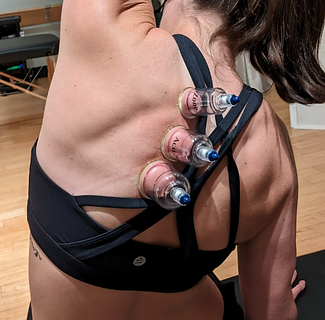
Static cupping uses suction cups placed on the skin and left in one spot for several minutes. The suction lifts the skin and underlying tissue to increase local blood flow, reduce muscle tightness, and encourage healing. You may feel tightness, warmth, or temporary round marks where the cups sat. It can help sore muscles, stiffness, and circulation issues. Avoid if you have broken skin, blood-clotting disorders, or certain skin conditions—tell your practitioner about medications and health issues first.
Gliding Cupping
Gliding cupping involves applying oil and moving a suction cup along the skin like a massage tool. It combines suction with movement to release soft tissue, break up adhesions, improve circulation, and reduce muscle tension. It usually feels like a deep, pulling massage and can leave mild redness. It’s good for larger tight areas or when a more mobile treatment is needed; same precautions apply as static cupping.
Mobile Cupping
Mobile Cupping is a technique where suction cups are applied to the skin (like in static cupping) but the therapist or client then moves the limb or body, or the therapist guides movement, so the cupped area stretches and the suction pulls tissues while they shift. The movement increases the mechanical stretch of skin, fascia, and muscle under the cup, enhancing the treatment’s effect.




KT Taping
KT (kinesiology) taping uses thin, stretchy adhesive strips applied to skin over muscles, joints, or ligaments. It’s designed to support movement (not fully restrict it), reduce pain, improve circulation and lymphatic drainage, and help with muscle function while you stay active.
Who it’s good for
-
Athletes and active people needing support during training or competition.
-
People recovering from sprains, strains, tendonitis, or joint irritations.
-
Those with swelling or bruising who need lymphatic support.
-
People needing proprioceptive feedback (improved body awareness) for movement retraining.
-
Individuals who want a low-profile, non-restrictive support option (can wear during daily activity and shower).
Benefits for musculoskeletal injuries
-
Pain reduction: Light skin lift and sensory input can change pain signals and reduce discomfort.
-
Support without restriction: Provides stability to injured muscles or joints while allowing normal movement, helping function during rehab.
-
Improved circulation and lymphatic drainage: The tape’s lifting effect can reduce swelling and speed removal of inflammatory fluids.
-
Enhanced proprioception: Increases body awareness, helping you move with better control and avoid harmful positions.
-
Facilitates rehab exercises: Makes it easier to perform corrective movements by giving tactile cues and mild support.
-
Can reduce muscle fatigue and improve timing: May help muscles engage more effectively during activity.
Dynamic Stretching Massage
RMT dynamic stretching is a type of active stretching led by a Registered Massage Therapist (RMT). Instead of holding a stretch still, the therapist guides you through controlled, gentle movements that take your muscles and joints through their full range of motion. These movement-based stretches warm up tissues, improve flexibility and joint mobility, reduce stiffness, and prepare the body for activity or recovery. They’re tailored to your needs and can help decrease pain, improve posture, and make everyday movement easier.


Remedial Exercise
Remedial exercises (massage therapy) — short definition
Remedial exercises are targeted, therapist-prescribed movements and stretches designed to correct muscle imbalances, restore joint range, and retrain movement patterns that contribute to pain or dysfunction. They’re simple, practical exercises you do between sessions to make the hands-on work last and to speed recovery.
How they help continue treatment after a session
-
Reinforce changes: Manual therapy creates short-term looseness, reduced pain, or better mobility; exercises lock in those gains by training muscles and nerves to hold the improved position.
-
Restore function: Strengthening weak muscles and stretching tight ones improves how you move in daily life, reducing re-injury risk.
-
Reduce symptom recurrence: Regularly doing prescribed movements decreases the chance that pain or stiffness returns.
-
Enable progress: Home exercises let the therapist build on improvements each visit, advancing the program safely.
Why chronic injuries need ongoing home work
-
Slow development: Many chronic issues develop gradually — postures, repetitive tasks, poor movement patterns, or unresolved minor injuries accumulate stress over months or years.
-
Compensation: When one tissue becomes painful or weak, other muscles and joints compensate. Those compensations become habitual and can cause new pain or limit recovery.
-
Tissue memory: Muscle tightness, shortened fascia, and altered motor patterns don’t fully reverse after one treatment; they require repeated, consistent loading and re-training to remodel tissue and change neural patterns.
-
Self-management: Home exercises give you daily, low-dose stimulus that retrains the nervous system and gradually remodels soft tissue — the same principle used in physical therapy and rehabilitation.
What typical remedial programs include
-
Mobility drills: Gentle joint movements to regain range (e.g., shoulder circles, hip swings).
-
Stretching: Targeted holds or dynamic stretches for chronically tight muscles.
-
Strengthening: Low-load, progressive exercises for weak or inhibited muscles (e.g., scapular stabilizers, glute activation).
-
Motor control and balance: Slow, controlled movements to re-teach coordination and posture.
-
Functional integration: Practicing tasks or postures that match your daily activities or sport.